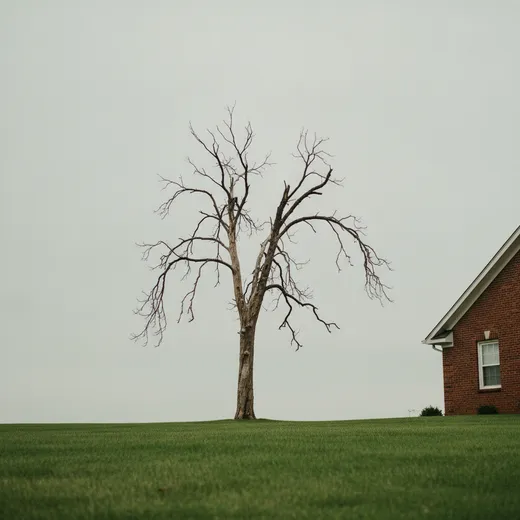
Trees are good at looking fine right up until they are not. But most of the time the signs are there for a season or more before anything breaks, if you know where to look. Here are three of the most reliable warning signs that a tree is in trouble, and why each one matters.
Sign one: flaws in the tree's structure
The way a tree is built tells you a lot about whether it will stay standing. The warning signs are structural: a deep crack running down the trunk or a major limb, a cavity or hollow where wood has rotted away, and tight V-shaped forks where two stems press together with bark trapped between them. That trapped bark, called included bark, makes a union that looks solid but splits under load. A tree can carry a structural flaw for years, then fail in the one storm that finds it.
Sign two: mushrooms and fungus
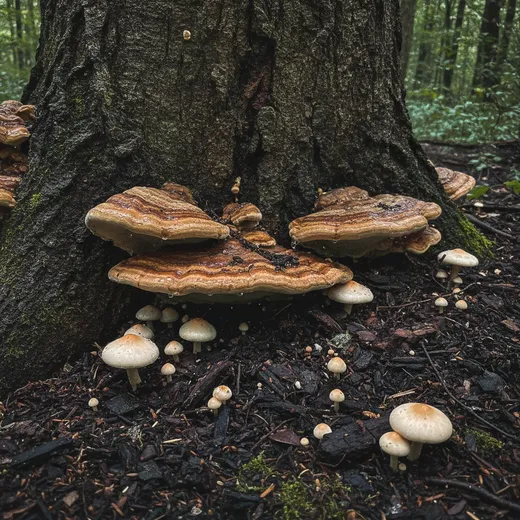
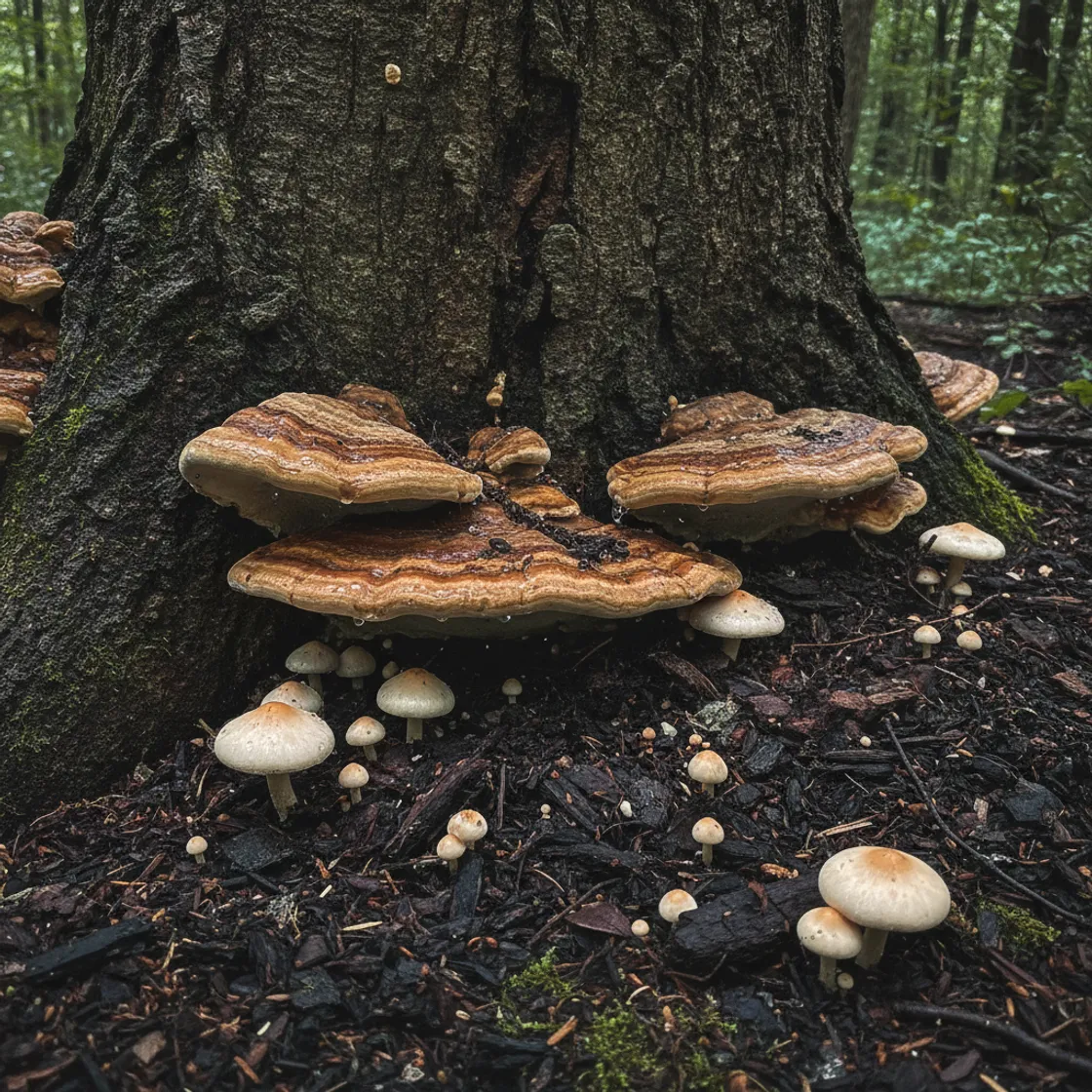
Mushrooms or hard shelf-like brackets growing on the trunk, at the base, or over the root zone are one of the most telling signs of trouble, because they usually mean the wood inside is already decaying. The fungus is the visible fruit of a much larger problem hidden in the roots or the heartwood. A tree can stand for a while with internal decay, but its margin of safety is shrinking, and fungus at the base in particular, near the critical root flare, deserves a prompt professional look.
Sign three: discolored or damaged wood and bark
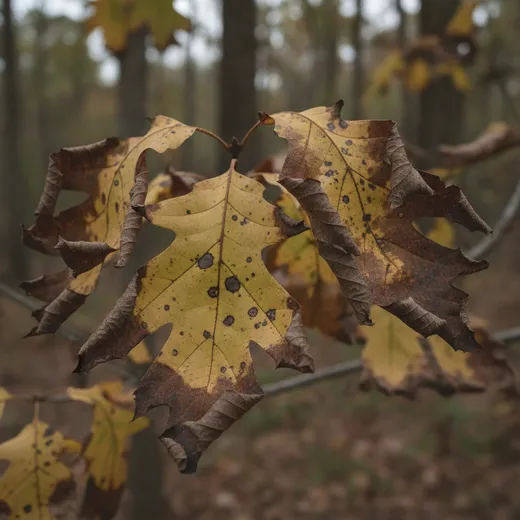
Healthy bark is intact and the wood beneath it is sound. Warning signs include bark that is cracking and falling away to reveal smooth dead wood, dark oozing or bleeding patches on the trunk, and areas of soft, crumbling, or discolored wood. Blotches, bands of dead tissue, and bleached or streaked wood all point to disease or decay working through the tree. Any one is worth investigating; several together usually mean the tree needs attention soon.
What to do when you spot one
The right response is not panic, and it is not ignoring it; it is an accurate assessment. Some unhealthy trees can be saved with targeted pruning, better care, or cabling. Others are too far gone and are safest taken down. The difference is not always obvious from the ground, which is exactly why a trained eye is worth having before you decide.
How Engram's Tree Service can help
We have looked at thousands of trees around metro Atlanta over more than 25 years, and Robin, our certified arborist, does every assessment in person. If a tree is showing any of these signs, have it checked before a storm makes the decision. When a tree can be saved, we prune and care for it; when it cannot, we remove it safely. Reach out for a free estimate.