Services
Tree Trimming and Pruning
Good pruning keeps a tree strong, safe, and shaped for the years ahead. Bad cuts do the opposite, so every cut has a reason.
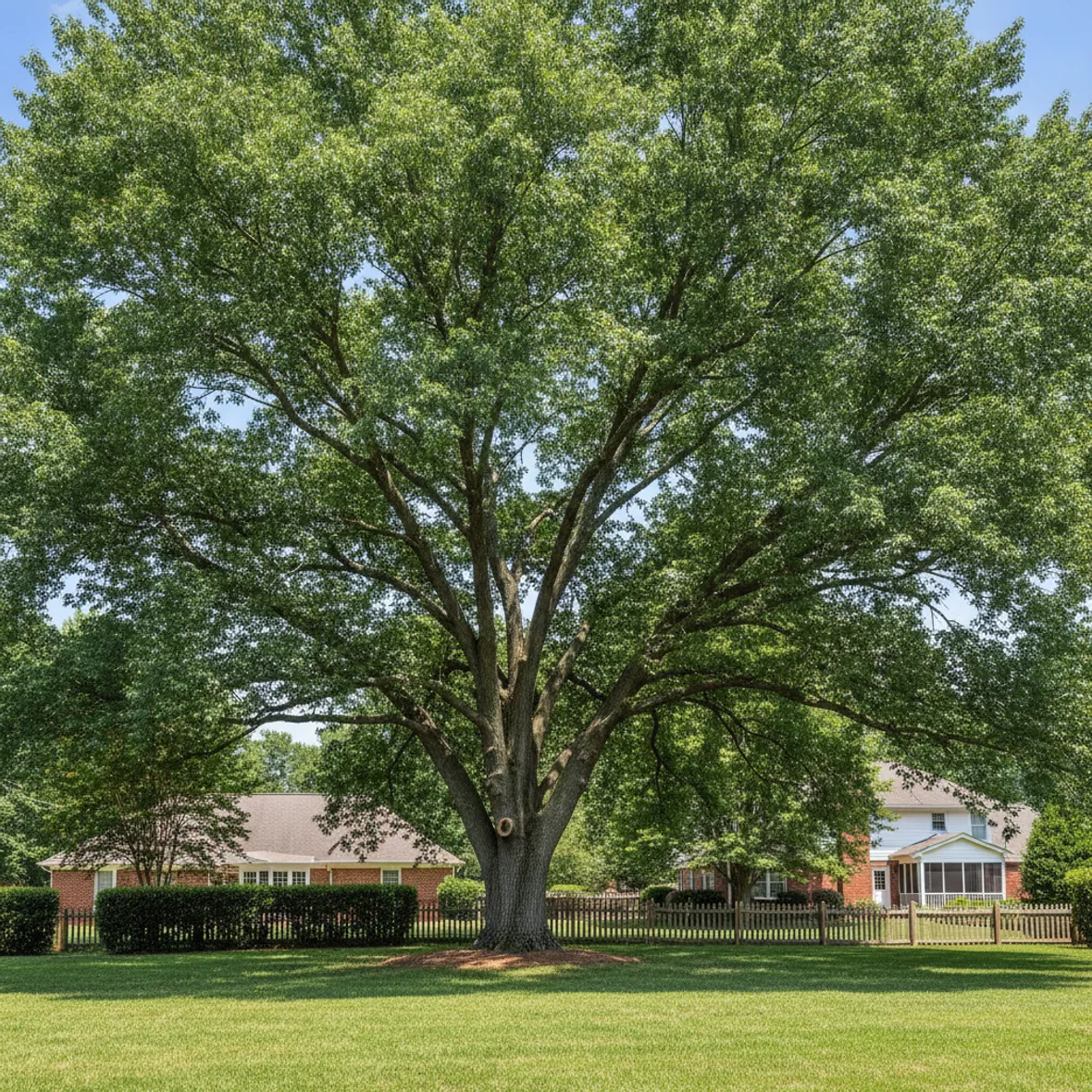
- Certified arborist Robin plans the pruning and does every estimate
- 25+ years Owned and run in Canton, serving metro Atlanta
- Licensed & insured Workers' comp and liability on every job
- Never topped Correct cuts that keep the tree healthy, never butchered
Pruning is more than tidying up
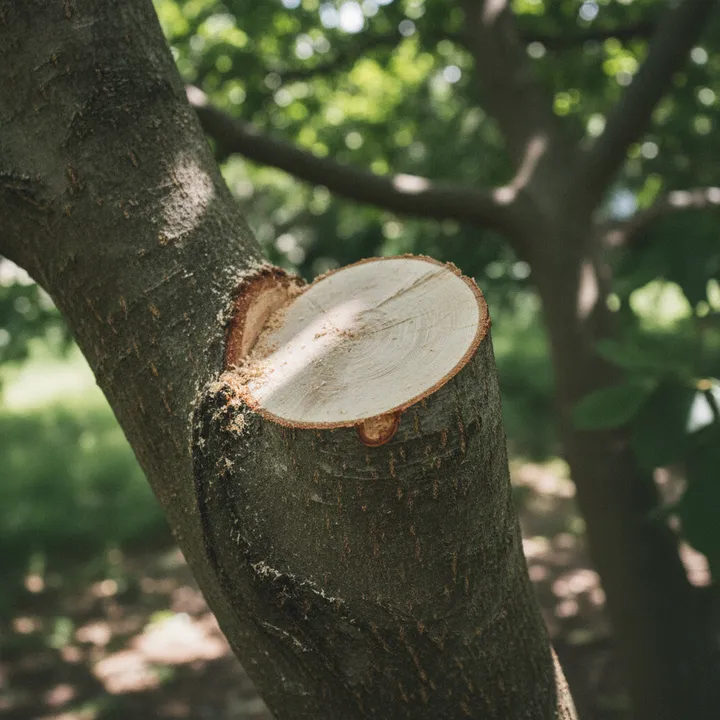
Trimming a tree well is not the same as cutting off whatever is in the way. Every cut changes how a tree grows, heals, and holds up in a storm. Done right, pruning keeps a tree strong, safe, and shaped for decades. Done carelessly, the same cuts invite decay, weak regrowth, and limbs that fail in the next big wind.
That is why a certified arborist plans the work. Robin looks at the whole tree, its species, and how it sits on your property, then decides which limbs to take, where to cut, and how much to remove in one season. The goal is a healthier tree, not just a tidier one.
What good pruning actually does
A well-planned trim is working toward several of these at once.
Keeps the tree healthy
Removing dead, broken, and crossing limbs lets the tree put its energy into sound, living wood.
Clears the house and drive
Lifting and thinning limbs off the roof, gutters, and driveway stops them rubbing, dropping, and blocking.
Reduces storm risk
Thinning a dense crown lets wind pass through instead of catching it like a sail, so fewer limbs fail.
Sets a young tree's structure
Early structural cuts guide a young tree into one strong leader and well-spaced branches for life.
Lets in light and air
Opening a crowded canopy gives the lawn, the garden, and the tree itself more sun and better airflow.
Improves how it looks
A balanced, well-shaped canopy simply looks cared for, without the butchered look of a bad topping job.
Where the cut is made matters as much as which limb
The difference between pruning that helps and pruning that hurts often comes down to a single inch. We cut back to the branch collar, the slightly swollen ring where a limb meets the trunk or a larger branch. That collar is where the tree seals the wound, so a clean cut just outside it heals over cleanly.
We never leave stubs, which die back and rot, and we never make flush cuts into the trunk, which tear open a wound the tree cannot close. On heavy limbs we cut in stages so the bark does not strip. Small choices, but they are the difference between a tree that heals and one that slowly declines.
The kinds of pruning we do
| Type of pruning | What it does | Best for |
|---|---|---|
| Structural pruning | Guides a young tree into one strong leader and well-spaced limbs | Young and newly planted trees |
| Crown thinning | Selectively removes inner limbs so wind and light pass through | Dense, sail-like mature canopies |
| Crown raising | Lifts the lowest limbs to clear the roof, drive, and walkways | Trees crowding a house or path |
| Deadwooding | Takes out dead, dying, and broken limbs before they fall | Any mature tree over something you care about |
| Crown reduction | Shortens an overgrown crown back to sound growth, never topped | Trees that have outgrown their space |
Raising the crown and clearing the house
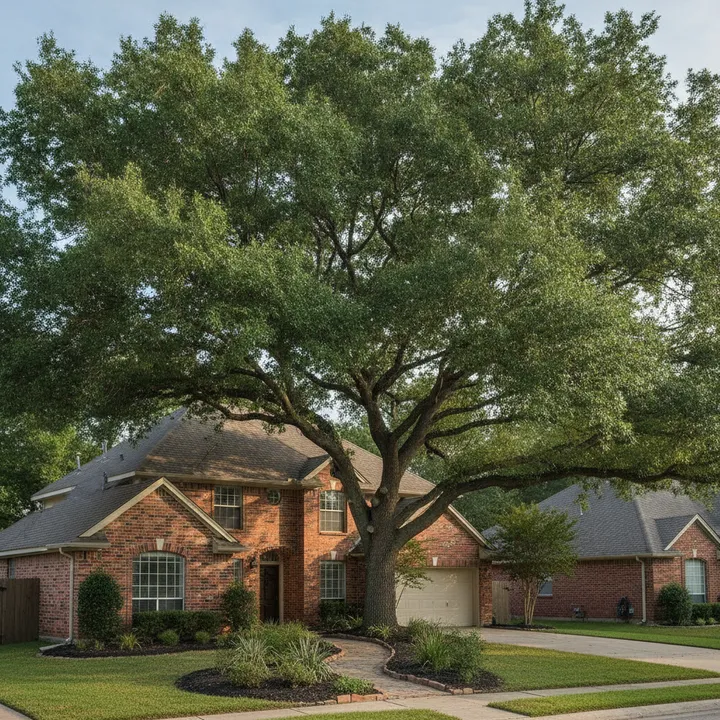
A lot of the trimming we do around north Atlanta homes is simply getting the tree off the house. Limbs that rub the roof wear through shingles, branches over the gutters drop leaves and clog them, and low limbs across a driveway scrape cars and block the view pulling out.
Raising the crown, cleanly lifting the lowest limbs, solves most of that without shrinking the tree. We take what is needed to clear the structure and keep the canopy balanced, so the tree still reads as a tree and not a lollipop on a stick.
Why we never top a tree
Topping, cutting a tree's main limbs back to stubs to make it shorter, is the single most damaging thing you can do to a mature tree. It is still common because it looks like a quick fix, but the tree pays for it: topping starves the tree, forces weak fast regrowth from the wounds, opens huge cuts that rot, and leaves a tree that is more dangerous in a few years, not less.
When a tree is genuinely too big for its spot, the right answer is a proper crown reduction back to sound growth, or a planned removal and a better-suited replacement. Robin will tell you honestly which one your tree needs.
- If a company offers to top your trees, treat it as a sign they cut corners elsewhere too.
- A tree that was topped before can often be restored gradually with correct cuts over a few seasons.
- Ask for the plan in writing so you know exactly what will be cut and why.
Where we prune trees
Based in Canton and working across the north metro. If your town is close by, call and ask.
Tree trimming questions
When is the best time to trim my trees?
For most north Georgia hardwoods, late winter while the tree is dormant is ideal, because it heals fast in spring and there are no leaves hiding the structure. But dead, broken, and hazardous limbs can and should come off at any time of year. Pines and a few other species have their own timing, which is one of the things Robin sorts out at the estimate.
How much should I have pruned at once?
As a rule we avoid taking more than about a quarter of a tree's living canopy in a single season, and often less on a stressed or older tree. Removing too much at once starves the tree and forces weak regrowth. If a tree needs a lot of work, we stage it over more than one visit.
Will trimming make my tree safer in storms?
It can, when it is done right. Thinning a dense crown lets wind pass through instead of pushing against it, and removing dead and weakly attached limbs takes out the pieces most likely to fail. It is not a guarantee against a severe storm, but a well-pruned tree holds up far better than a neglected one.
Do you trim palms, shrubs, or hedges?
Our work is trees: hardwoods, pines, and large ornamentals, with a focus on structural and safety pruning rather than shearing hedges or shaping small shrubs. If you are not sure whether your job is a fit, call and describe it and we will tell you straight.
Can bad pruning really hurt a tree?
Yes. Topping, flush cuts, and leaving stubs all create wounds a tree cannot seal, which invite decay and weak regrowth. A lot of what a good arborist does is prevent or undo that kind of damage. Where the cut is made matters as much as which limb comes off.
Is the estimate really free?
Yes. Robin comes out, looks at your trees, and gives you a clear written price with no charge and no pressure. If pruning is not what the tree actually needs, she will tell you that too.
Related services
Certified arborist
The assessments and honest advice behind every pruning plan.
Learn more →Tree removal
When a tree cannot be saved, a safe, planned removal by access.
Learn more →Crane and bucket work
The reach for the high, heavy cuts a ladder should never touch.
Learn more →Storm and emergency
24-hour help when a limb or a whole tree comes down.
Learn more →Free estimates, done by a certified arborist.
Tell us about the tree. Robin will come look and give you a straight answer.