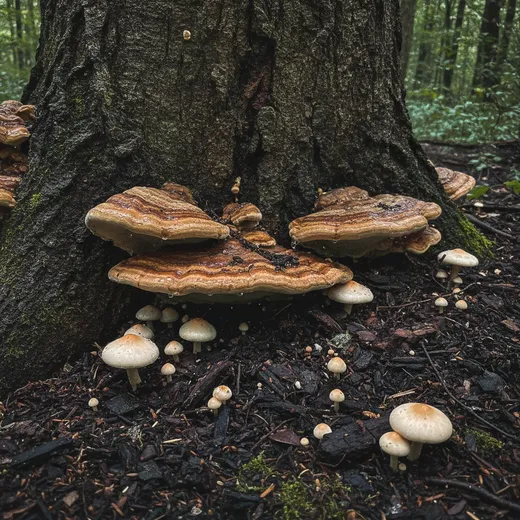
Annosus root rot is a fungal disease that attacks the roots and lower trunk of pines and some other conifers, and because it works underground it is often well advanced before the tree shows it above the surface. It spreads through the soil from root to root and takes hold especially on stumps and freshly cut surfaces, which means a thinned or recently worked stand of pines is at particular risk. Here is what to watch for.
Conks at the base
The clearest sign is the disease's own fruiting body: a conk, a leathery bracket that is white to cream on the underside and brown to buff on top, often found low on the trunk, at the root collar, or on nearby stumps, sometimes hidden in the duff and litter. Finding these conks around the base of a pine is a strong indication that annosus is at work in the roots below.
A thinning, fading crown
Because the disease is destroying the roots, the top of the tree shows the shortage. The crown thins, needles fade from healthy green to yellow-green and then brown, needles are shorter and sparser than they should be, and growth slows. This gradual thinning from the top is the tree telling you its roots can no longer supply it, though on its own it can be mistaken for drought or other stress.
A sudden lean or fall
The most dangerous symptom is structural. As annosus rots the roots and the base, it destroys the very anchor that holds the pine up, so an affected tree can lean suddenly or fall over entirely, sometimes in a wind that a healthy pine would have shrugged off, and sometimes with little warning. A pine that has begun to lean, especially one with conks at the base, is a serious hazard.
Damaged and decaying roots
Beneath the surface, the roots and lower trunk are where the real damage is: the wood becomes stringy, discolored, and decayed, losing the strength that holds the tree. This root and butt decay is usually confirmed by a professional, but it is the underlying reason for every symptom above, and the reason an affected tree cannot simply be nursed back to health.
Protecting your pines
Prevention matters because there is no easy cure once the roots are rotted. Keeping pines healthy and unstressed, avoiding unnecessary wounds, and being cautious about how and when pines are thinned all reduce the risk, since fresh stumps are a common entry point. Where annosus is confirmed, the affected trees usually need removing before they fall, both for safety and to slow the spread to neighbors.
How Engram's Tree Service can help
We work on tall pines across metro Atlanta constantly, and our certified arborist can tell you whether a fading or leaning pine is dealing with root rot and how much of a hazard it has become. When an affected pine needs to come down, our crane and crew remove it safely, even on a tight lot. If your pines are thinning or leaning, reach out for a free estimate.