We are a tree service, not your insurance agent, and every policy is different, so treat this as a general guide and always confirm the details with your own insurer. That said, after 25 years of storm calls around metro Atlanta we have seen how these claims tend to go, and knowing the pattern helps you ask the right questions.
Coverage usually follows the damage, not the tree
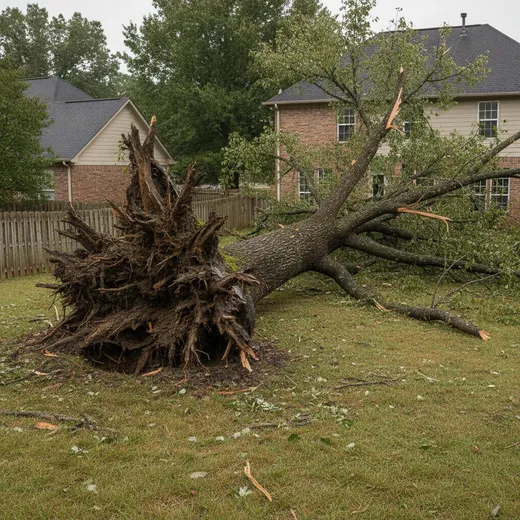
The key thing to understand is that a standard homeowners policy is generally there to protect your property, not the tree itself. If a tree falls and damages a covered structure, your house, garage, fence, or sometimes a shed, the policy often helps pay to repair the structure and to remove the tree that is on it, usually up to a limit and after your deductible. If the same tree falls and hits nothing but the lawn, many policies will not pay to haul it away, because no covered structure was damaged.
That is why two neighbors can have nearly identical storms and very different outcomes: one had a tree land on the roof, the other had a tree land in the open yard.
Why the tree fell can matter
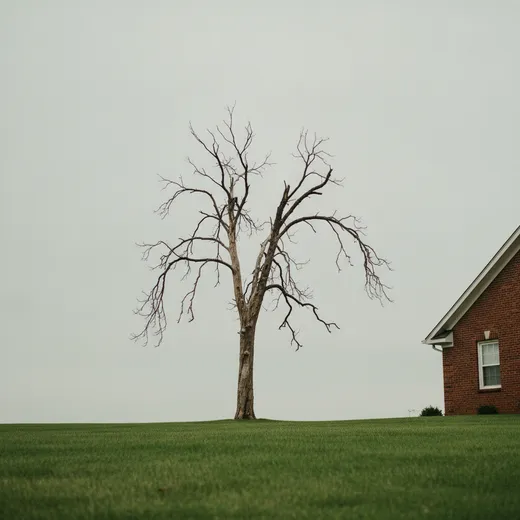
Insurers often distinguish between a tree that came down from a sudden, covered event, like a storm or lightning, and one that fell because it was already dead or neglected. A healthy tree blown over in a storm is the classic covered case. A long-dead tree that finally toppled may be treated as a maintenance issue the homeowner should have addressed, and a claim can be reduced or denied on those grounds.
Read the fine print on limits and specifics
A few things worth checking on your own policy before you ever need it:
- The debris-removal limit. Many policies cap how much they pay to haul away a fallen tree, separate from the structure repair.
- Whether removal is covered only when a structure is hit, or also when a tree blocks a driveway or a ramp used for access.
- Your deductible. On a smaller job, the deductible can be more than the cost, so a claim may not be worth filing.
- Whose tree it was. A neighbor's tree that falls on your house is usually still your claim, with your insurer, in most situations.
Choose the work carefully either way
Whether insurance is paying or you are, removing a tree off a structure is skilled, hazardous work, and the cheapest quote is not always the one that leaves your roof intact. A clear, itemized estimate protects you either way: it gives your insurer what they need, and it tells you exactly what the job includes. We are licensed and carry workers' compensation and liability insurance, which matters a great deal when a crew is working over your home.
How Engram's Tree Service can help
If a tree has come down on your property, we can provide the documented, itemized estimate an insurance claim needs, and we bring the crane and crew to remove it safely. If you have a tree you are worried about, the smartest move is to have our certified arborist look at it before a storm does. Ask us for a free estimate and we will give you a straight assessment.