Georgia sits in a rich overlap of species, where southern hardwoods, Appalachian trees, and pines all grow well, so the average metro Atlanta yard is more varied than people realize. Learning to recognize what you have tells you how big it will get, how strong its wood is, what problems to watch for, and how to prune it. Here are the ones we see most.
The trees you are most likely to have
Oaks
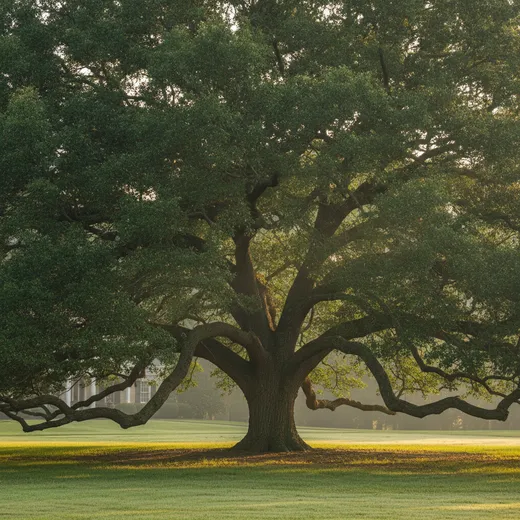
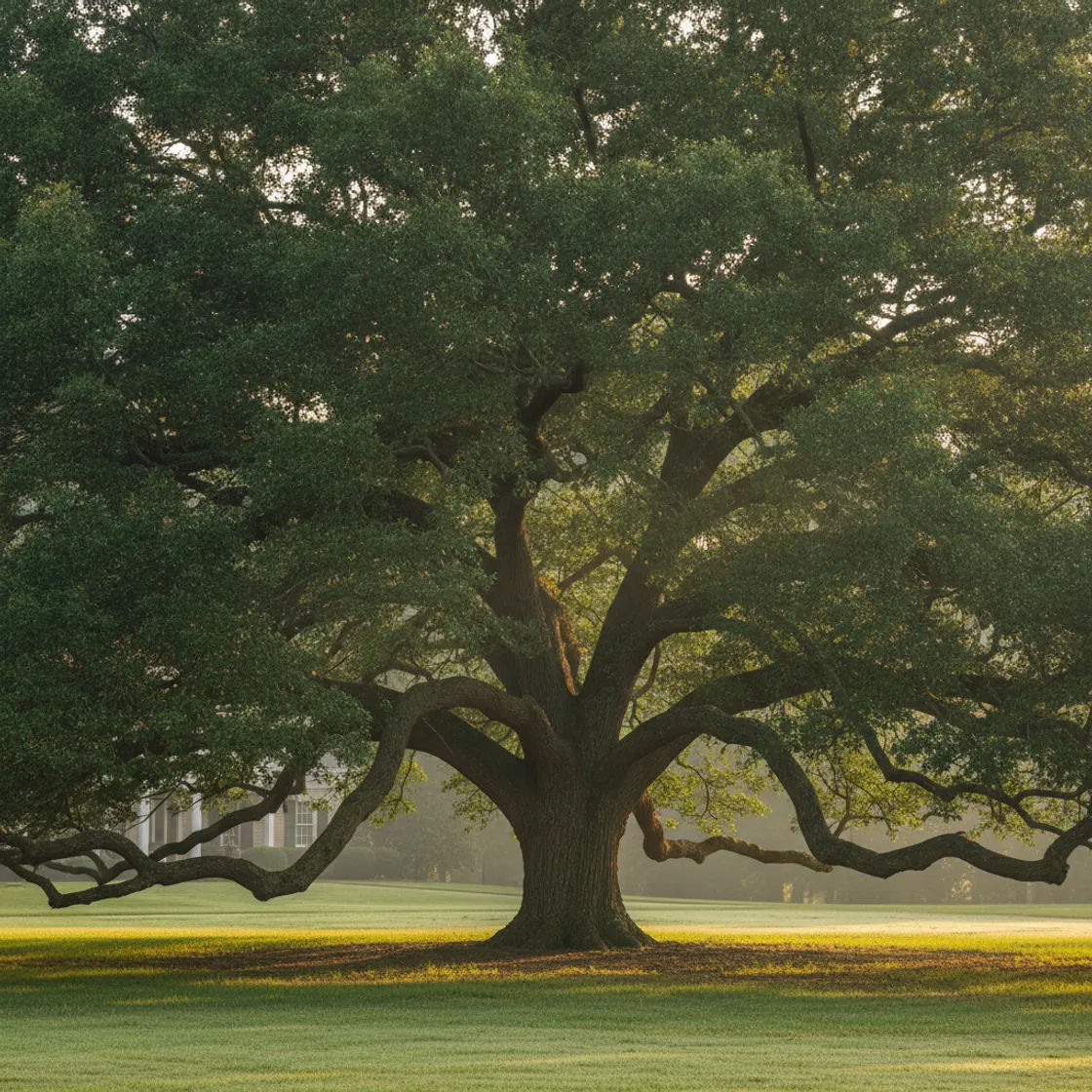
Oaks are the backbone of the north Georgia canopy, from towering white and red oaks to the broad, spreading live oaks. They are strong, long-lived, and generous with shade, but the big ones carry real weight over a house, and they are vulnerable to oak wilt if pruned in the warm months. If you have a large oak near the home, it is worth an occasional professional look.
Loblolly and other pines
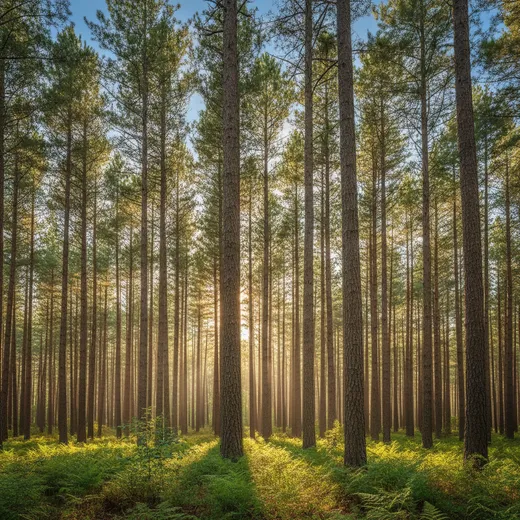
Pines are everywhere here, growing fast and straight to great heights. They give quick height and a soft understory, but they are shallow-rooted, brittle in ice, and prone to dropping limbs, which makes a dead or leaning pine near the house a priority.
Dogwood and redbud
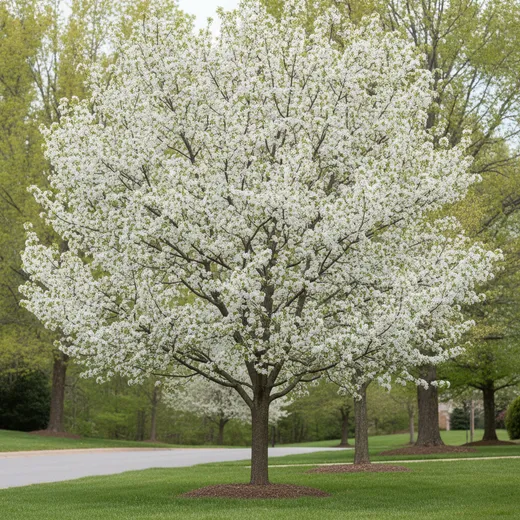
These are the understory ornamentals that light up a Georgia spring, dogwood in white and redbud in pink-purple. They stay small, so they rarely threaten a house, but they are sensitive to drought and to being planted in the wrong spot, and dogwoods in particular can struggle with disease in damp, crowded conditions.
Tulip poplar and sweetgum
Tulip poplars grow tall and fast with tulip-shaped spring flowers high in the crown, but the fast growth means weaker wood that storms find. Sweetgums are tough and shady, and famous for the spiky seed balls that carpet a lawn every fall, which is the main reason people ask us about them.
How to start identifying yours
You do not need to be an expert. Start with what is easy to see:
- Leaves. Lobed like an oak, star-shaped like a sweetgum, heart-shaped like a redbud, or needles like a pine.
- Bark. Furrowed, smooth, plated, or peeling, which is often distinctive.
- Shape. A tall straight pine reads very differently from a broad, low-branching live oak.
- Fruit and flowers. Acorns, spiky gumballs, spring blooms, and winged seeds all point to a family.
Why it is worth knowing
Knowing your trees turns vague worry into a real plan. It tells you which trees are structurally strong and which are storm-prone, which can be pruned when, and which are worth protecting versus which were probably a mistake to plant. It also helps you spot trouble early, because you know what healthy looks like for that species.
How Engram's Tree Service can help
We have worked on just about every tree that grows around metro Atlanta over the last 25 years. If you want to know what you have, whether a big oak or pine is safe, or how to care for the trees on your property, our certified arborist is glad to walk the yard with you. When a tree does need pruning or removal, we have the crew and equipment to handle it. Reach out any time.